In safety footwear, outsole manufacturing is typically something that gets handed off—source a compound, approve a sample, move on. At Shoes For Crews®, we take a different approach.
Understanding how slip-resistant shoes are made starts with one question: who controls the process? For us, the answer is we do—from the rubber compound formulation to the finished mold—because slip resistance isn't just a feature we add to our shoes. It's the reason we exist.
Why Outsole Manufacturing Is Hard to Get Right
Outsole manufacturing is complex. It involves precision chemistry, controlled heat, exact pressure, and careful mold maintenance. There are a lot of variables, and any one of them can affect how a finished shoe performs on a wet floor.
Slip resistance isn't a feature you can bolt on at the end of the process. It has to be built in from the start, which means the quality of the outcome depends entirely on how much control you have over every step along the way.
That's the standard we hold ourselves to.
How Slip-Resistant Shoes Work—and Why Manufacturing Determines Performance
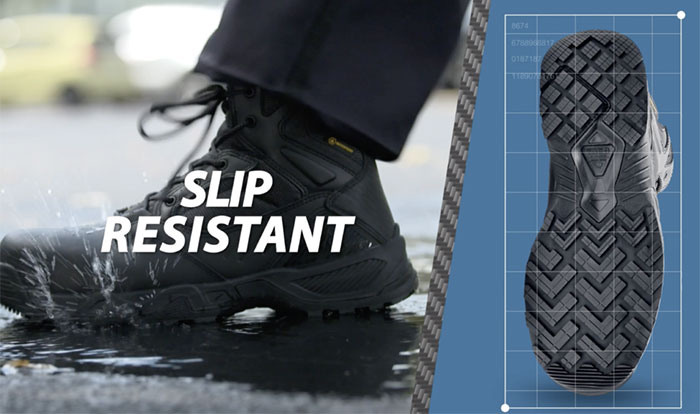
Slip-resistant shoes work by maximizing friction between the outsole and the floor surface, even when that surface is wet, oily or greasy. How well that happens depends almost entirely on two things: the rubber compound and the tread geometry.
Get the compound wrong and the shoe grips on day one but degrades fast. Get the tread geometry wrong and the outsole can't channel liquid away from the contact point. Get either one inconsistent across production runs and you have a shoe that performs differently than the one that passed testing.
This is why slip-resistant outsole technology isn't just about the design; it's about the process that produces it, batch after batch, pair after pair.
We Own Every Step of the Process
Shoes For Crews manufactures its own outsoles, controlling every variable from start to finish. That means we decide the rubber compound, the heat, the pressure, and the mold. And it means we test at every stage, not just the finished shoe.
“We're the only company I'm aware of that takes slip resistance to this level.”
Nathan Crary, Chief Supply Chain Officer at Shoes For Crews
That's not a marketing claim. It's a structural reality. Here's what that looks like in practice:
11 Rubber Compounds, Each With Its Own Formula
Not all floors are the same. A commercial kitchen, a hospital corridor and a factory floor each present different surface conditions—and a single rubber formulation can't account for all of them.
Shoes For Crews works with 11 distinct rubber compounds. Each has its own proprietary formulation designed for specific performance requirements, built to our specification, not an off-the-shelf standard.
Every Batch Tested Before It Moves Forward
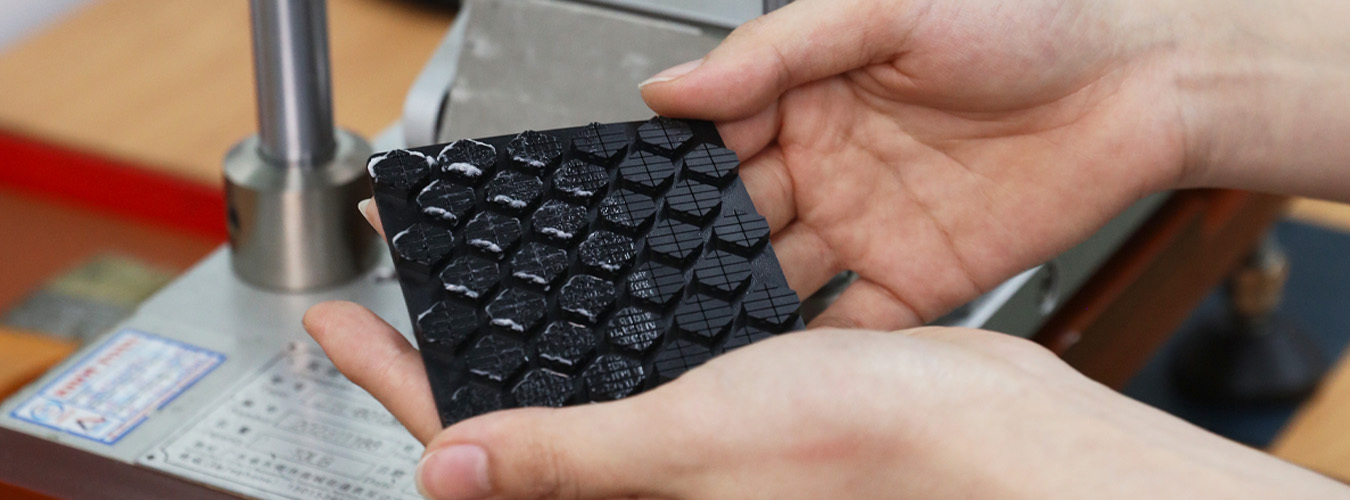
Before an outsole is ever made, we test the chemical compound of the rubber batch. If it doesn't pass, it doesn't move forward. No exceptions.
“Every batch of rubber is tested before we even go into the next step of manufacturing.”
Nathan Crary
This is upstream quality control, catching problems before they become products. We test the raw material first, then the finished shoe. The goal is to reduce the number of failure points that could ever reach a worker's foot.
CNC-Cut Molds: Engineered Surfaces, Not Cast Ones
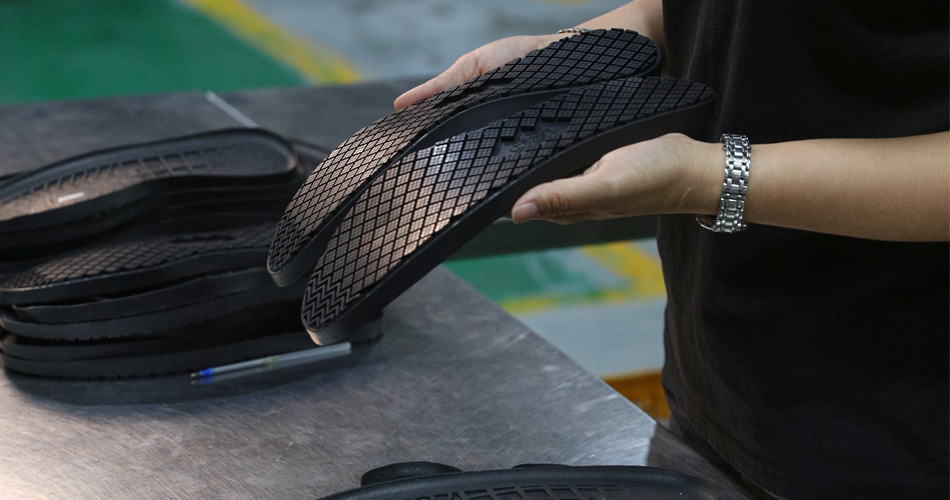
The grip pattern on an SFC® outsole isn't produced from a generic template. Our molds are CNC-cut—computer-machined to precise tolerances—so the surface geometry is engineered to the specific performance requirements of each outsole design.
The result is a tread pattern that does exactly what it was designed to do. Engineered molds produce engineered surfaces. The grip you see is the grip that was built.
Daily Testing & Mold Replacement When Performance Drops
Testing doesn't stop once production begins. We test slip resistance daily, by size. If performance shows any decline, we replace the mold.
“Any time we have any degradation in quality or slip resistance we replace the mold.”
Nathan Crary
Molds wear over time. That wear affects surface geometry, which affects grip. Running a mold past its performance threshold means producing shoes that don't match the original tested specification.
“The product in our inventory matches the testing from the very first day the shoe was made.”
Nathan Crary
That consistency is what workers are counting on when they lace up on a wet kitchen floor or a greasy factory line.
Every Pair Inspected
After manufacturing, every pair of Shoes For Crews shoes is inspected individually. Not a random sample from each production run. Every single pair.
This is the final checkpoint in a process built around not letting problems through. By the time a pair reaches inspection, it's already passed chemical testing, batch testing, daily slip resistance checks and mold quality standards. Inspection is the confirmation, not the only safeguard.
What This Means for Workers
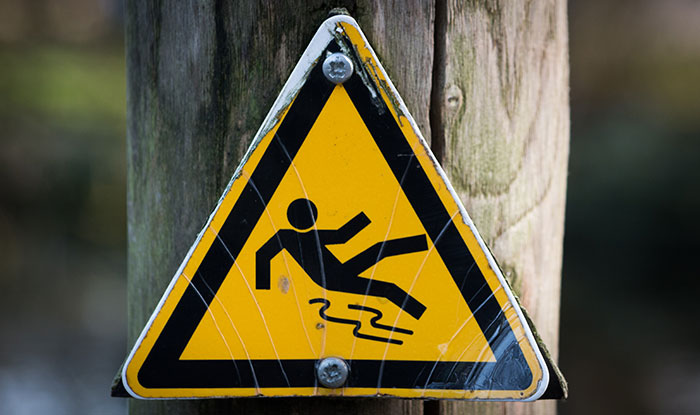
Slip-and-fall injuries cost U.S. businesses more than $11 billion annually. For the workers involved, the consequences are far more personal—time off, injury, lost income, and in the worst cases, long-term physical impact.
The best slip-resistant work shoes aren't just the ones with the highest lab score on day one. They're the ones that perform consistently across every pair, every shift and every floor condition. That's only possible when the manufacturing process controls for consistency, not just peak performance.
Kitchen workers, hospital staff, and factory teams just need the grip to be there when the floor is wet. That's what our process is built to deliver.
The Bottom Line
Shoes For Crews has been protecting workers since 1984. The reason we've held that position for over four decades isn't marketing—it's process ownership. When you control the rubber compound, the mold, the testing and the inspection, you control the outcome. And when slip resistance is your reason for existing, you don't cut corners on any of it.
FAQs
How are slip-resistant shoes made?
Slip-resistant shoes are made by combining a formulated rubber compound with a precision-engineered tread pattern. The rubber is transformed through heat and pressure into a grippy, durable material, while the tread geometry channels liquid away from the contact point. Shoes For Crews controls both in-house, with 11 proprietary compounds, CNC-cut molds and testing at every stage.
How do manufacturers design slip-resistant shoes for workplace safety?
Designing for workplace safety means accounting for the specific floor conditions workers face, like wet kitchens, oily factory floors, or polished hospital corridors. The outsole has to perform across all of them. That requires testing against real conditions at every stage of production, not just a lab pass on the finished shoe.
What materials are used to manufacture non-slip footwear outsoles?
Rubber is the primary material, but the compound formulation is what determines performance. Hardness, grip level and durability all come from how the rubber is mixed and processed, not the raw material itself. Shoes For Crews works with 11 distinct proprietary compounds, each formulated to our slip resistance specifications.
How do shoe companies engineer soles for superior grip on wet surfaces?
Grip on wet surfaces comes down to the rubber compound's ability to displace liquid and the tread geometry that channels it away from the sole. Shoes For Crews uses CNC-cut molds machined to precise tolerances, so the tread surface is engineered to spec, not cast from generic tooling.
How do manufacturers test the slip resistance performance of their footwear products?
Slip resistance is measured using standardized testing protocols on wet and oily surfaces. Shoes For Crews certifies its footwear through SATRA, an independent testing program, against ASTM F3445-24 for non-safety toe footwear and ASTM F2413-18 for safety toe footwear. That certification is the baseline. On top of it, we test the rubber compound before manufacturing begins and test slip resistance daily during production by size, replacing the mold if performance drops at any point.