
National Safety Month: 5 Ways to Prevent Slips, Trips & Falls at Work
Slip, trip and fall prevention is the practice of identifying and eliminating workplace hazards—wet floors, poor lighting, inadequate footwear, cluttered walkways—before they cause injury. It combines environmental controls, employee training and proper protective equipment to reduce one of the most common and costly categories of workplace accidents.
June is National Safety Month. But if you're waiting for a calendar reminder to take workplace safety seriously, your team is already behind.
Slips, trips and falls aren't a seasonal problem. They're one of the most persistent hazards across every industry—and one of the most preventable. 240,000 to 480,000 non-fatal workplace accidents happen every year because of them. That's hundreds of thousands of shifts that ended the wrong way, and most of them didn't have to.
Here's what actually moves the needle.
Why Slips, Trips & Falls Keep Happening
The numbers are hard to ignore. Slip, trip and fall incidents accounted for 18% of all non-fatal workplace accidents in 2024 and cost organizations far more than the initial claim. For one University of California system alone, over 700 falls and trips per year added up to more than $7 million in direct workers' comp costs—and an estimated $15 million when indirect costs were factored in.
These accidents don't care what industry you're in. They happen in hospital corridors and commercial kitchens. On warehouse floors and grocery aisles. In schools, on loading docks and in government buildings. The surfaces change. The risk doesn't.
The frustrating truth: a meaningful percentage of these incidents are preventable with the right combination of footwear, environment and training.
5 Practical Steps to Cut Your Slip, Trip & Fall Risk
1. Get the right footwear on the right feet.
This is your most direct lever for slip trip and fall prevention, and it pays for itself. Companies that implement a corporate safety footwear program report at least a 60% reduction in slip-related workplace injuries, and in some cases up to 80%.
That's not a marginal improvement. That's a structural shift in your incident rate.
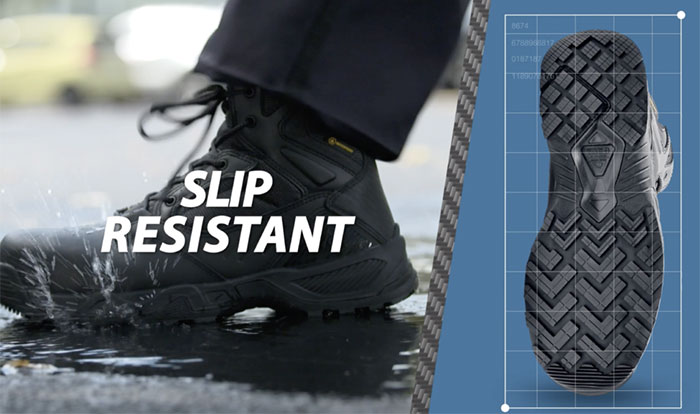
But not all slip-resistant shoes are the same. True slip resistance is measured by Coefficient of Friction (COF), a standardized score that tells you how well an outsole grips on contaminated surfaces. Look for footwear independently tested against ASTM standards using real-world contaminants: water, grease, oil. Our Know Your Score tool lets you compare COF scores by style before you buy, so you're not guessing.
The right shoe also depends on the environment. Kitchen workers, healthcare staff and warehouse crews all face different floor conditions and different trip hazards. A corporate safety footwear program helps you standardize the right footwear by role, and takes the guesswork out of compliance.
2. Keep floors dry and clean.
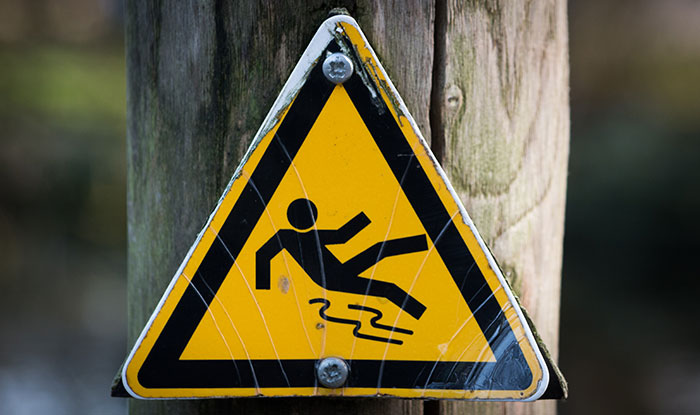
Wet, oily or debris-covered floors are among the most common trip hazards in any workplace—and are entirely preventable. Establish clear cleaning protocols for high-traffic and high-contamination areas. Spill response should be immediate, and wet floor signage should go up before cleanup begins, not after.
Don't forget what you can't see. Floors that look clean can still carry an invisible film from food residue or cleaning products. Scheduled deep-cleaning routines cut through that hidden layer. Non-slip mats and anti-fatigue mats in high-risk zones add another line of defense.
3. Train your team to spot hazards before they become incidents.
A prepared workforce is your best early-warning system for preventing slips, trips and falls. Hazard awareness training should be part of every onboarding program—and refreshed regularly, not treated as a one-time box to check.
Workers should know how to recognize high-risk conditions, understand safe walking techniques in hazardous environments and know how to report problems fast. Our Safety Resources center offers practical tools for managers, including checklists like "Tips for Reducing Workplace Slip and Fall Accidents" and "5 Signs You Need a Workplace Safety Program"—built to help you structure training that actually sticks.
4. Fix your lighting.
Poor lighting is a quiet contributor to slips, trips and falls safety failures. Shadows, burned-out bulbs and dark transitional zones mean your workers can't see what's in their path.
Conduct a lighting audit and prioritize upgrades in transitional areas. Add high-visibility floor markings and clearly defined walkways, especially in environments where foot traffic crosses equipment or vehicle paths. In manufacturing and industrial settings, this step alone can make a significant difference.
5. Conduct a risk assessment and build audits into the routine.
Effective prevention of slips, trips and falls starts with knowing exactly where your risks are. That means conducting a structured risk assessment before hazards become incidents.
Walk your facility with fresh eyes. Map every area where slip, trip and fall risk is elevated: wet or greasy surfaces, uneven flooring, poor drainage, cluttered walkways, inadequate lighting, worn mats and missing or damaged signage. Rate each hazard by likelihood and potential severity, then assign ownership and a resolution timeline.
Why Footwear is the First Line of Defense
Of all the interventions available, footwear is the one that travels with the worker.
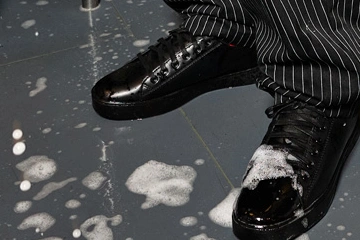
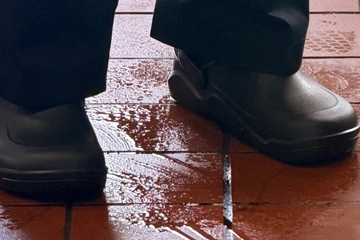
You can have clean floors, good lighting and solid training. But if your crew is wearing standard sneakers or fashion shoes on a greasy kitchen floor, their risk stays dangerously high.
Slip resistance comes down to how an outsole interacts with a contaminated surface. Shoes For Crews® has been working on this problem since 1984, when we made the first commercially available slip-resistant work shoe.
The tread edges cut through spills like a squeegee, while wide grooves flush out grease, water and debris with every step. Specialized rubber compounds keep that grip reliable on everything from icy loading docks to abrasive warehouse floors.
This is meaningfully different from a regular shoe with a rubber sole. When workers are 8 to 12 hours into a shift and fatigue starts slowing their reactions, the difference between a certified slip-resistant shoe and an everyday sneaker can be the difference between a safe shift and a lost-time injury.
We back that with a $5,000 slip-and-fall warranty for corporate accounts. That's how confident we are in what our shoes can do.
Turn These 5 Steps Into a Program that Runs Itself
Good intentions don't prevent slips, trips and falls. Systems do.
The difference between a workplace that sees lasting injury reduction and one that doesn't usually comes down to infrastructure, not awareness.
Here's what that looks like in practice. A structured corporate safety footwear program removes the two biggest barriers to consistent adoption: cost and friction.
Layer in the other four steps—clean floors, trained employees, good lighting and regular risk assessments—and you have a prevention program that doesn't depend on a calendar reminder to stay active.
Companies partnering with Shoes For Crews on managed programs get dedicated account management and the tools to track adoption, measure performance and demonstrate ROI to leadership.
National Safety Month is a useful starting gun. The finish line is a workplace where preventing slips, trips and falls is built into how you operate, not revisited once a year.
Ready to get there? Explore Shoes For Crews' corporate safety shoe programs.
FAQs
What are the primary causes of workplace slip, trip and fall incidents?
The most common causes are wet or oily floor surfaces, uneven or damaged flooring, cluttered walkways, poor lighting, inadequate footwear and the absence of hazard warning signs.
How do you implement a slip, trip and fall prevention program in a business?
An effective program has four components: proper footwear, environmental controls, training and documented audits.
What are the OSHA requirements for maintaining safe walking surfaces?
OSHA's walking and working surfaces standard (29 CFR 1910.22) requires employers to keep floors clean and dry, properly maintained and free of trip hazards.
How do you conduct a risk assessment for slip, trip and fall hazards?
Walk your facility systematically and map every area where risk is elevated. Document findings and corrective actions.
How does slip-resistant footwear reduce workplace slip, trip and fall risk?
Slip-resistant footwear maximizes outsole contact with the floor while actively evacuating contaminants from the tread, reducing the likelihood of slips on hazardous surfaces.